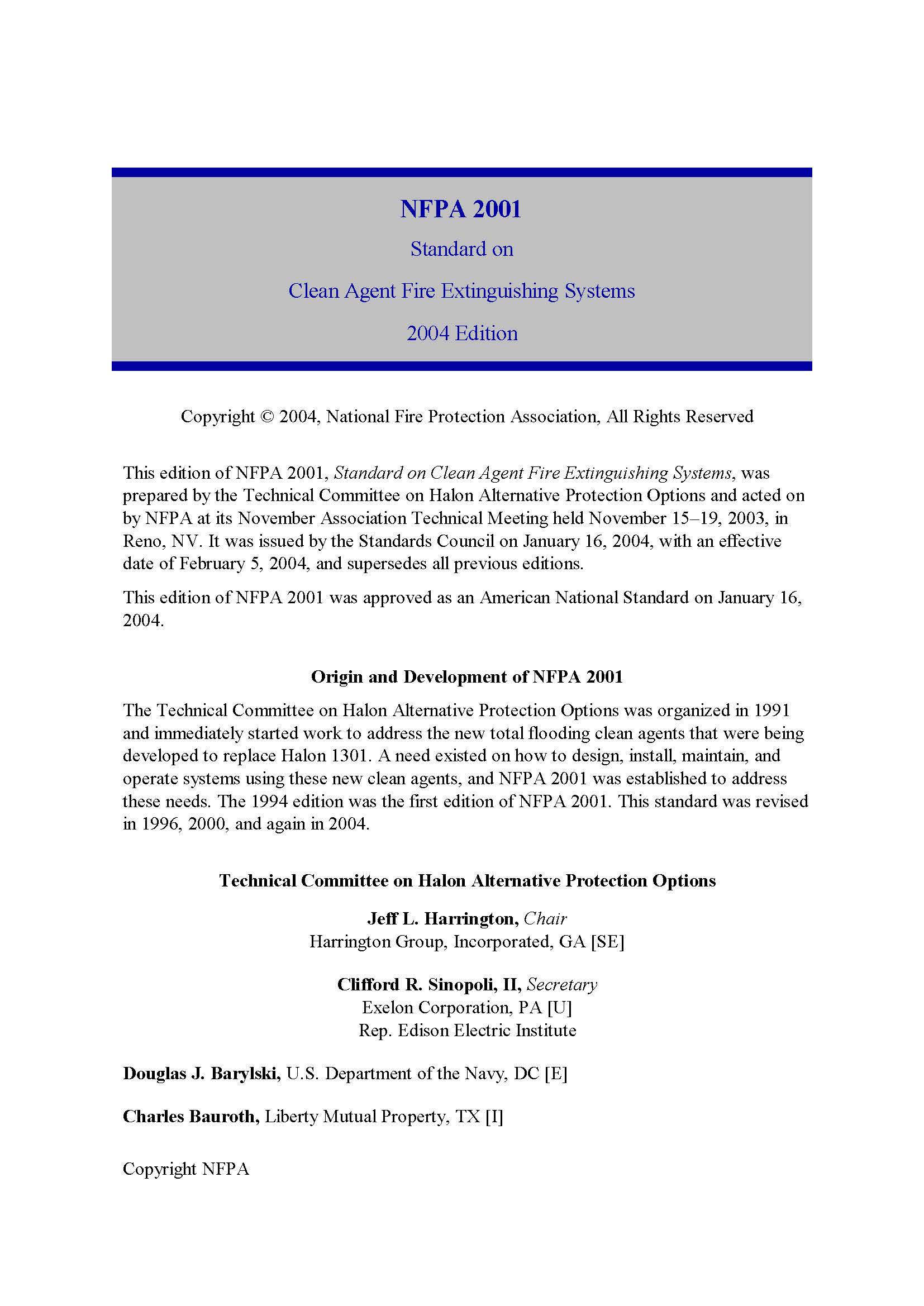
Keunggulan FM200 Suppression
KEUNGGULAN FM200 FIRE SUPPRESSION SYSTEM
Ada begitu banyak perangkat atau peralatan maupun sistem pencegahan dan pemadaman kebakaran yang saat ini beredar dipasaran. Tentunya setiap peralatan maupun sistem tersebut telah disesuaikan dengan kebutuhan pemadaman dan tingkat resiko kebakaran yang mungkin akan ditimbulkan. Setiap kebakaran yang terjadi, memiliki klasifikasi tertentu yang dalam pemadamannya juga mempunyai klasifikasi media pemadaman yang berbeda pula. Misal seperti perangkat elektronik, mungkin air bukan media yang tepat untuk melakukan pemadaman pada perangkat elektronik yang terbakar. Mengapa demikian? Ada beberapa alasan yang patut dipertimbangkan.
Yang pertama, air merupakan media penghantar listrik yang sangat baik, sehingga resiko terjadinya tersengat arus listrik akibat pemadaman kebakaran terhadap perangkat elektronik kepada manusia, akan sangat tinggi. Kedua, kerusakan perangkat elektronik itu sendiri ataupun perangkat elektronik lain yang letaknya berdekatan. Pemadaman perangkat elektronik yang dilakukan menggunakan air sebagai medianya, tentu akan merusak perangkat elektronik tersebut. Akhirnya, tingkat keparahan kerusakan perangkat elektronik tersebut bukan karna kebakaran yang terjadi, malah bisa jadi karena air itu sendiri. Dan apabila ada perangkat elektronik lain yang letaknya berdekatan, besar kemungkinan juga turut mengalami kerusakan.
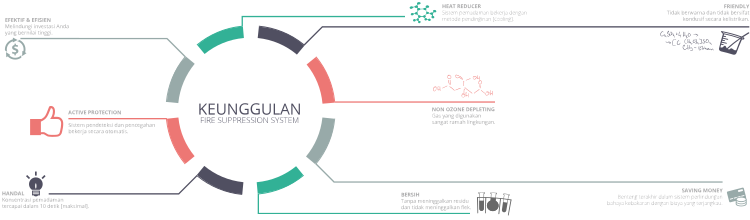
FM200 Fire Suppression merupakan salah satu dari banyaknya perangkat atau sistem pencegahan dan pemadaman kebakaran tersebut. Sistem ini bekerja memadamkan api secara otomatis dengan menggunakan gas clean agent yang ramah lingkungan sebagai medianya pemadamannya. FM200 System terdiri dari beberapa perangkat mekanikal dan elektrikal yang saling berkaitan antara setiap perangkatnya menjadi sebuah kesatuan sistem. Berikut ini merupakan beberapa keunggulan dari penggunakan FM-200 Suppression System.
1. ACTIVE PROTECTION
FM200 Fire Suppression mampu mendeteksi potensi dini kebakaran dan melakukan pemadaman terhadap api secara otomatis dalam waktu yang singkat dan secara bersamaan. Mereka mengerjakan tugasnya sesuai dengan prosedur yang telah ditetapkan secara otomatis. Namun, apabila ingin menyesuaikan dengan keinginan kita, sistem ini juga dapat dioperasikan secara manual. Dan apabila dalam keadaan tertentu, misal pada saat terjadi gagal sistem pada kelistrikan atau penyebab lainnya, kita juga dapat mengambil langkah pemadaman menggunakan metode manual dengan memanfaatkan sistem mekanikal yang terdapat di dalam sistem tersebut.
2. NON-OZONE DEPLETING
Media pemadam yang digunakan sistem ini adalah menggunakan FM200 clean agent gas. Gas FM 200 yang sangat ramah lingkungan, sehingga tidak berpotensi merusak lapisan ozon. Gas FM-200 ini merupakan pengembangan dan pengganti dari gas Halon 1301 yang sangat berpotensi tinggi sebagai penyumbang terbesar kerusakan lapisan ozon.
3. NO RESIDUE
Tidak ada efek residu/kotoran apapun yang akan ditimbulkan oleh media gas pada sistem ini pasca dilakukannya pemadaman. Media gas yang digunakan pada sistem ini sifatnya cepat menguap dan tidak meninggalkan dampak bercak pada setiap bagian komponen perangkat yang tersentuh oleh gas ini. Selain itu, media gas ini juga tidak memiliki karakteristik warna. Clean & clear.
4. SAFE
Media gas yang digunakan untuk FM200 System juga cukup aman jika terhirup manusia. Namun ada peringatan keras agar tidak berada di dalam ruangan yang diproteksi oleh FM-200 Suppression saat terjadi discharge. Karena apabila Anda memiliki catatan penyakit asma akut, ini akan sangat berbahaya terhadap kesehatan dan keselamatan Anda.
5. HEAT REDUCER
Dalam melakukan pemadaman, kalau mengacu dari teori segitiga api, media gas pada FM200 System ini menggunakan metode pendinginan [cooling] dalam memutus rantai segitiga api tersebut. Sehingga kadar oksigen di dalam ruangan yang diproteksi oleh sistem ini, tetap dalam kapasitas ambang toleransi.
6. QUICK ACTION
Konsentrasi pemadaman yang dilakukan oleh FM200 System ini tercapai hanya dalam waktu 10 detik [maksimal]. Dalam tempo waktu secepat itu, dapat dipastikan bahwa api sudah benar-benar padam dan sangat kecil kemungkinan api dapat timbul kembali.
7. NON CONDUCTIVE
Sebagai media pemadaman yang efektif, FM200 gas clean agent ini juga tidak bersifat kondusif secara kelistrikan. Sehingga sangat aman untuk diaplikasikan sebagai media pemadaman FM-200 Fire Suppression.

Tertarik untuk mendapatkan pengetahuan yang lebih detail dan spesifik? Silahkan HUBUNGI KAMI.
Jika informasi yang kami sajikan dalam laman ini tidak cukup mewakili apa yang Anda harapkan, silahkan kirim saran & penilaian Anda ke
Web Development INDOREEDcust.idea [at] indoreed.id. Kami sangat menghargai kontribusi dan aspirasi Anda untuk berpartisipasi dalam mengembangkan kualitas pelayanan kami.

Cara Kerja FM200 Suppression
CARA KERJA FM200 FIRE SUPPRESSION SYSTEM

Konsep dasar cara kerja FM-200 System adalah melalui proses INPUT >> PROCESS >> OUTPUT. Dari masing-masing equipment yang terpasang di dalam FM 200 Fire Suppression ini, memiliki 2 [dua] mekanisme pengoperasian, yakni Mechanical dan Electrical. Artinya, perangkat mechanical masih bisa dioperasikan dengan dan tanpa adanya aliran arus listrik, sedangkan perangkat electrical bergantung pada adanya asupan aliran arus listrik. Sehingga pada saat terjadinya kegagalan arus listrik, salah satu keunggulan FM200 System ini masih bisa beroperasi secara maksimal, tentunya dengan beberapa pengecualian.
PERANGKAT INPUT
1. Fire Alarm System
Fire Alarm System adalah salah satu bagian dari FM200 Fire Suppression yang bekerja untuk mendeteksi adanya kemungkinan indikasi asap yang disebabkan oleh kebakaran. Pada sistem fire alarm ini, instalasi diaplikasikan menjadi 2 [dua] zone dan metode instalasi yang digunakan adalah metode Cross-Zone. Pada saat terindikasi, fire alarm dibedakan menjadi 2 [dua] jenis fase indikasi fire alarm, yaitu fase Alarm-1 [Single-zone] dan fase Alarm-2 [Cross-zone].
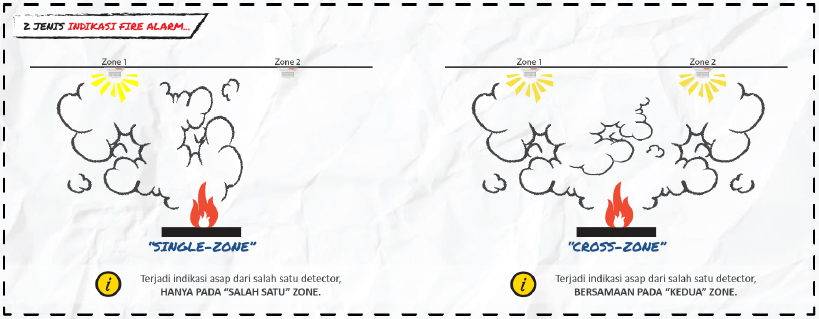
Fase Alarm-1 [Single-zone]. Jika 1 detector di salah satu zone mendeteksi adanya partikel asap [ALARM-1]. Efek dari fase ini adalah Multi-tone akan mengeluarkan bunyi terputus-putus pendek dan lampu tanda “Evacuate Area Immediately” akan menyala. Pada tahap ini FM-200 clean agent gas suppression tidak akan release.
Fase Alarm-2 [Cross-zone]. Jika kemudian detector pada zone lainnya juga mendeteksi adanya partikel asap, sehingga sekarang ada 2 detector atau lebih pada 2 zone yang aktif, maka kondisi ini disebut juga dengan fase ALARM-2. Pada tahap ini, Multi-tone akan mengeluarkan bunyi terputus-putus panjang dan lampu tanda “Evacuate Area Immediately” akan menyala.
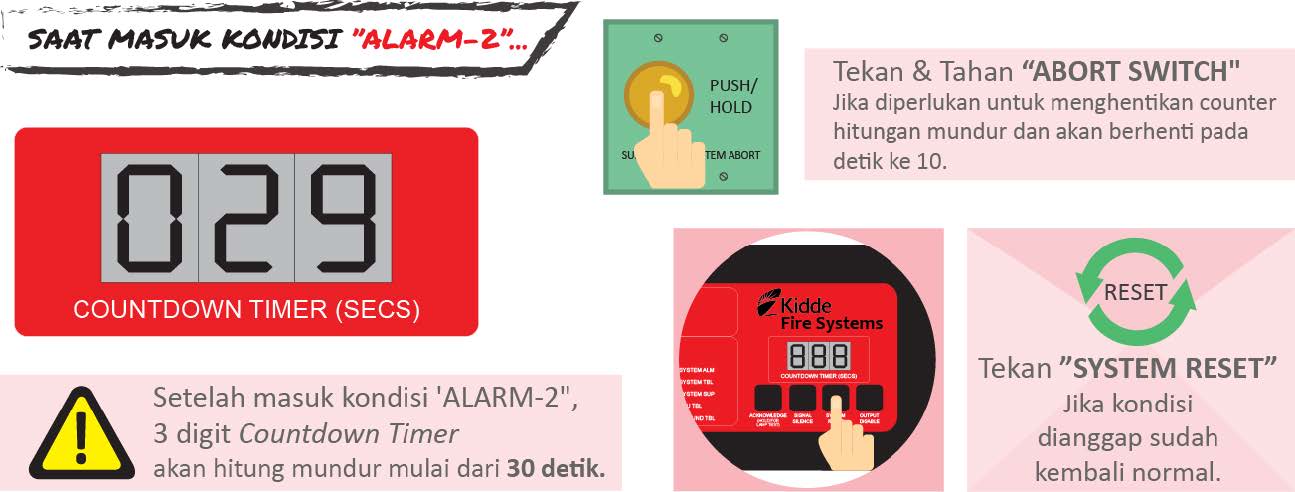
Selanjutnya Control panel akan mengirim signal untuk shutdown A/C, demikian juga system akan mulai menghitung delay [count-down] selama 30 detik. *Kemudian gas FM-200 akan release bersamaan dengan Alarm Bell yang berada di luar ruangan akan berbunyi dan lampu “Gas Discharged” yang berada di luar ruangan juga akan menyala.
Namun, jika pada saat delay berlangsung, jika tombol "Abort" ditekan dan ditahan, maka hitungan delay akan berhenti pada detik ke-10 menuju 0. *Sehingga gas belum akan release. Dan jika tombol "Abort" dilepas, maka count-down akan menghitung mundur kembali, mulai dari detik ke-10.
2. Manual Release Station
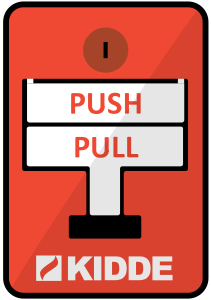 Perangkat input yang satu ini hanya digunakan saat dalam kondisi darurat, misalnya pada saat sistem pendeteksi dini atau sistem fire alarm mengalami gagal fungsi. Untuk mengoperasikan perangkat ini, dibutuhkan seorang operator ataupun petugas yang sedang berjaga yang menyadari keadaan darurat tersebut. Dan perangkat ini masih membutuhkan sistem electrical untuk dapat beroperasi, artinya perangkat ini hanya bisa bekerja saat Control Panel masih memiliki asupan aliran arus listrik.
3. Lever Operated Control Head
 In-case, saat terjadi pemadaman listrik dan battery cadangan Control Panel juga sudah tidak mendukung untuk memberi cadangan power listrik, dengan sangat menyesal system ini harus dioperasikan secara manual. Dan satu-satunya cara untuk mengoperasikan system ini untuk dapat segera discharge adalah dengan menarik tuas "Lever Operated Control Head". Hanya dengan cara inilah, clean agent yang terdapat di dalam cylinder dapat release dan discharge dari cylinder penyimpanan untuk melakukan pemadaman terdapat api. Untuk mengoperasikan perangkat ini, dibutuhkan seorang operator ataupun petugas yang inisiatif dan tanggap untuk melakukan tindakan tersebut.
4. Abort Switch Station
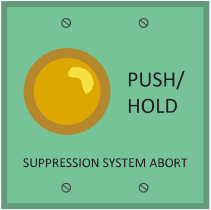 Perangkat ini berfungsi untuk membatalkan aktifitas saat clean agent gas akan menjelang release/discharge. Dan perangkat ini hanya dapat diaktifkan atau difungsikan disaat fire alarm memasuki fase Alarm-2 atau pada saat count down delay 30 detik setelah Alarm-2 dan untuk menahan count down pada detik ke-10, seperti yang sudah dijelaskan di atas [figure saat masuk kondisi Alarm-2]. Sehingga apabila kebakaran yang terjadi di dalam ruangan yang diproteksi masih bisa tangani oleh petugas untuk dapat dipadamkan menggunakan APAR [Alat Pemadam Api Ringan] atau Fire Extinguisher. Tentunya akan lebih efektif, tanpa harus kehilangan sebagian besar gas yang diinvestasikan di dalam cylinder gas Fire Suppression System, mengingat cost/harga isi ulang untuk clean agent gas tersebut masih relatif tinggi. Kami menyarankan yang terbaik untuk pelanggan kami, sesuatu yang efektif dan efisien.
5. Supervised Disconnect Switch
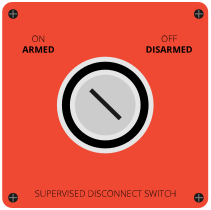 Perangkat ini berfungsi untuk menonaktifkan output control unit [Selenoid] pada saat terjadi ALARM. Atau secara fungsi digunakan untuk menonaktifkan selenoid saat melakukan maintenance atau saat fire drilling dalam mode supervisory atau stand-by, agar pneumatic tidak merespon dan bereaksi saat disengaja ataupun tidak disengaja, apabila terjadi False alarm.
PERANGKAT PROCESS
Master Control Fire Suppression
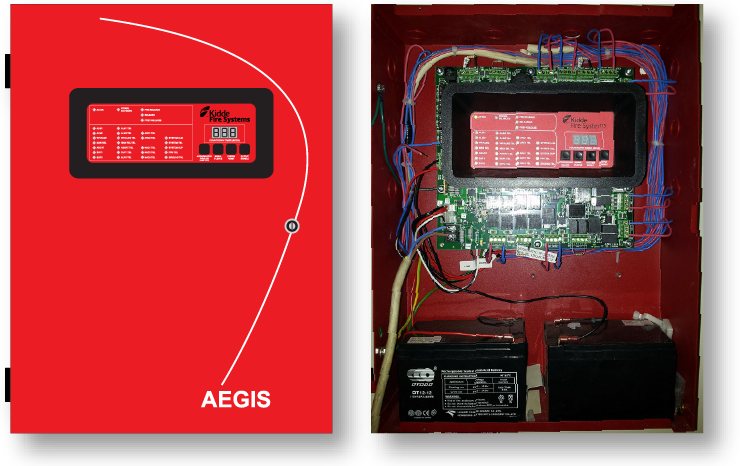 Satu-satunya perangkat yang memproses segala aktifitas di dalam FM200 Fire Suppression disebut dengan Control Panel. Perangkat inilah yang mengelola segala respon dari perangkat-perangkat input yang selanjutnya diproses dan dikelola lalu memberikan reaksi berupa perintah dan tindakan lanjutan kepada perangkat-perangkat output. Segala aktifitas yang dilakukan Control Panel membutuhkan aliran arus listrik. Namun saat Control Panel kehilangan power dari sumber tenaga utama, Control Panel masih memiliki 2 [dua] battery kering sebagai cadangan. Sehingga apabila terjadi pemadaman listrik, Control Panel masih bisa beroperasi untuk melayani FM 200 Fire Suppression.
PERANGKAT OUTPUT
1. Multi-tone/Hornstrobo
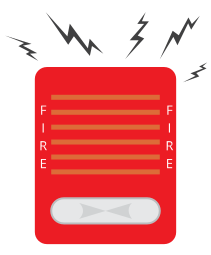 Multi-tone/Hornstrobo ini terletak di dalam ruangan yang diproteksi oleh Fire Suppression System. Perangkat ini beroperasi dengan mengeluarkan bunyi putus-putus pendek saat sistem Fire Alarm memasuki fase ALARM-1 dibarengi dengan kilatan cahaya. Lalu Multi-tone/Hornstrobo ini akan mengeluarkan bunyi putus panjang saat memasuki fase ALARM-2 dibarengi juga dengan kilatan cahaya.
2. Alarm Bell
 Vibrating Bell atau Fire Alarm Bell bekerja dengan cara memberikan signal berupa audio dengan kapasitas suara mencapai 94 db at 10 feet [3.1 meters]. Perangkat ini akan berbunyi disaat memasuki fase Alarm-2 dan aktif juga bersamaan dengan lampu tanda "Gas Discharge". Alarm Bell akan terus berbunyi bahkan saat FM200 clean agent gas suppression telah selesai discharge.
3. Lampu Tanda "Evacuate Area Immediately"
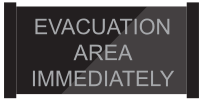 Perangkat ini bekerja berdasarkan instruksi dari Control Panel FM-200 Suppression System yang beroperasi secara otomatis. Sign Lamp ini akan menyala pada saat terjadi fase ALARM-1 atau saat salah satu pada 1 titik detector mengindikasi dan sebagai peringatan untuk memberitahu petugas agar secepatnya segera meninggalkan ruangan yang diproteksi FM 200 Fire Suppression. Lampu "Evacuate Area Immediately" sign, berada di atas pintu keluar di dalam ruangan yang diproteksi oleh FM200 Suppression.
4. Lampu Tanda "Gas Discharge"
 Perangkat ini bekerja berdasarkan instruksi dari Control Panel FM200 Suppression yang beroperasi secara otomatis. Sign Lamp ini akan menyala pada saat gas FM-200 release dan discharge serta untuk mengisyaratkan petugas agar tidak boleh lagi masuk ke area yang diproteksi, selama FM 200 clean agent gas discharge. Equipment ini berada di atas pintu masuk di luar ruangan yang diproteksi oleh FM200 Suppression.
5. Electronic Control Head
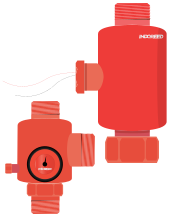 Saat memasuki fase Alarm-2 dan saat Control Panel sudah melakukan count-down 30 detik, apabila tidak ada pembatalan yang direspon oleh equipment lainnya, maka Electronic Control Head akan melakukan trigger pada head valve untuk membuka saluran secara elektronik sesuai instruksi dari Control Panel. Perangkat ini terpasang pada cylinder valve sebagai sarana untuk men-trigger gas FM-200 agar release dan discharge secara elektronik.
6. Pressure Operated Switch
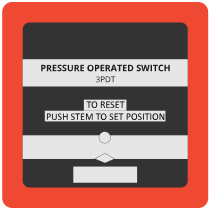 Equipment ini berfungsi sebagai sarana monitoring [supervisory] untuk mengetahui clean agent gas discharge dari cylinder dan untuk menonaktifkan output control unit [Selenoid] pada saat terjadi ALARM dan memberi laporan kepada Control Panel FM 200 Suppression.
7. Discharge Nozzle
 Fungsi sebagai sarana distribusi gas dari storage cylinder ke dalam ruangan yang diproteksi. Sederhananya, perangkat ini fungsinya sama seperti kran, namun discharge nozzle selalu standby dalam posisi terbuka dan umumnya varian putarannya adalah 180° dan 360°.
Tertarik untuk mendapatkan pengetahuan yang lebih detail dan spesifik? Silahkan HUBUNGI KAMI.
Jika informasi yang kami sajikan dalam laman ini tidak cukup mewakili apa yang Anda harapkan, silahkan kirim saran & penilaian Anda ke
Web Development INDOREEDcust.idea [at] indoreed.id. Kami sangat menghargai kontribusi dan aspirasi Anda untuk berpartisipasi dalam mengembangkan kualitas pelayanan kami.
Apa itu FM200 Suppression
PENGERTIAN FM200 FIRE SUPPRESSION SYSTEM

FM200 Fire Suppression adalah kombinasi antara perangkat sistem pendeteksi dini dan perangkat sistem penindakan yang mampu bekerja secara bersamaan dan secara otomatis. Sistem pengoperasian Automatic FM-200 Fire Suppression System bekerja tanpa atau dengan campur tangan manusia. Artinya, FM 200 Suppression ini dapat beroperasi penuh secara otomatis tanpa bantuan manusia. Ya, perangkat cerdas ini mampu mendeteksi dan akan langsung mengambil langkah cepat untuk melakukan penindakan pemadaman kebakaran hanya dalam waktu 10 detik [maksimal].
"Dalam kasus tertentu, FM200 System juga tetap bisa dioperasikan secara analog. Apabila perangkat pendeteksi fire alarm atau sistem kelistrikan mengalami kegagalan."
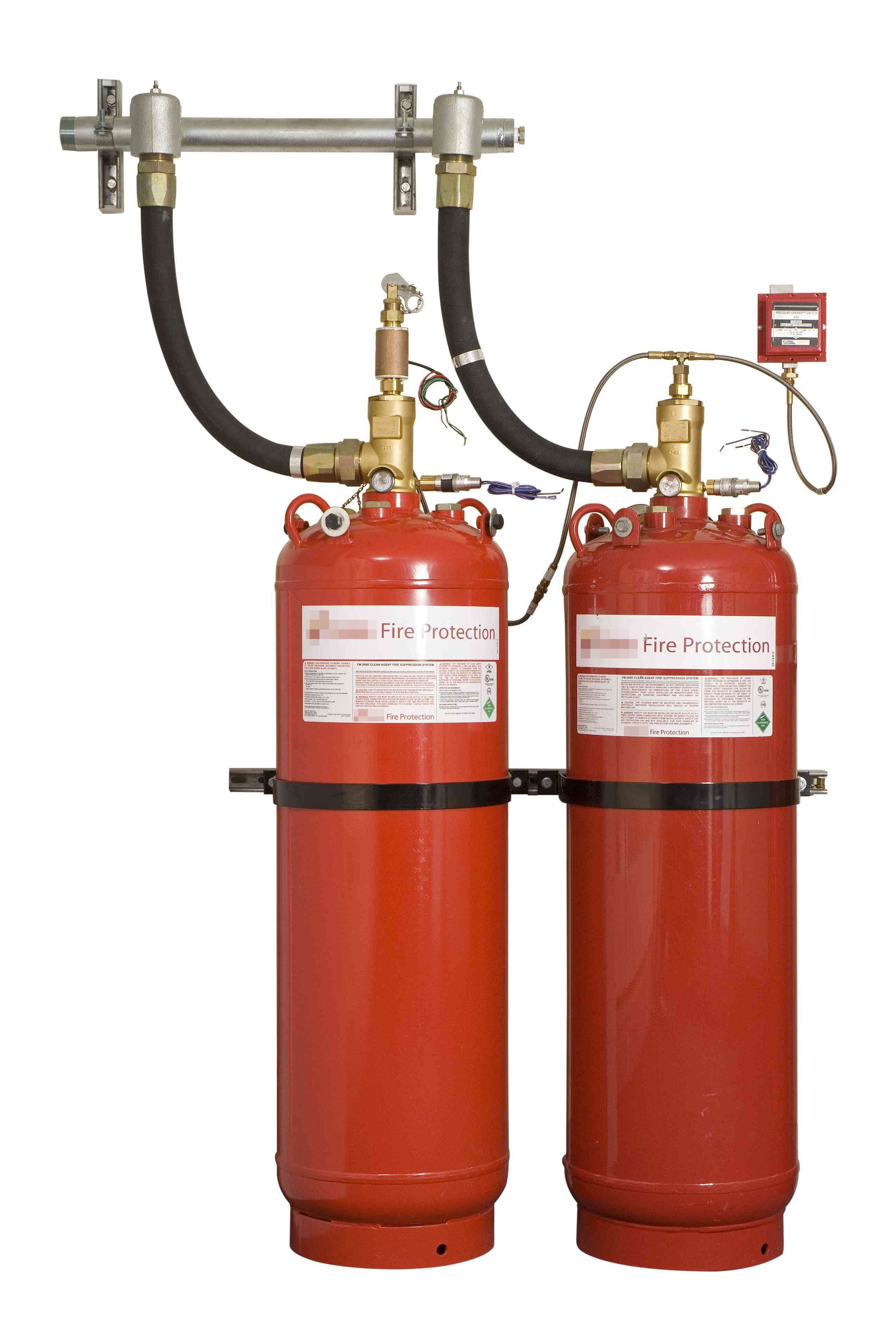
FM 200 Fire Suppression sudah menjadi standar kebutuhan di segala sektor industri, karena FM200 Suppression mampu mencegah atau mengendalikan kerusakan dan kerugian yang akan diakibatkan oleh kebakaran pada perangkat atau material yang memang harus dilindungi. Pada umumnya FM-200 Fire Suppression menggunakan Gas sebagai extinguishing agent-nya. Karena biasa digunakan untuk melindungi perangkat-perangkat elektronik seperti ruangan server, instalasi jaringan komputer, trafo, genset, turbin, UPS, control room, dll.
Sistem aplikasi FM200 Suppression, menggunakan gas yang ramah lingkungan [clean agent gas], sehingga memiliki daya padam yang cepat dan tepat serta tidak meninggalkan residu, selain itu tidak memerlukan biaya yang tinggi untuk melakukan pemulihan akibat terjadinya kebakaran. Serta tidak merusak lapisan ozon setelah gas terlepas ke udara.
Nama formula kimia Gas FM-200 adalah HFC-227ea atau 1,1,1,2,3,3,3-Heptafluoropropane, namun lebih dikenal dengan nama Heptafluoropropane. Beberapa merk dagang gas HFC-227ea seperti FM-200 by Dupont, Solkaflam 227 by Solvay Fluor, MH-227 by Shanghai Waysmos. Ada juga extinguishing clean agent gas sejenis lainnya seperti Halotron™ I, Novec-1230, Argonite IG-55, MH-125, FE-36, atau NAF-125. Mereka hampir memiliki karakter yang sama, lebih cenderung dibedakan oleh nama merek dagang.
Automatic Gas FM200 Suppression tidak seperti sprinkler system atau pemadam portable otomatis lainnya. Mereka mampu memberikan pemadaman terhadap api, namun water sprinkler akan meninggalkan kerusakan pada perangkat yang tidak mengalami kebakaran. Akhirnya tingginya biaya pemulihan yang dikeluarkan, bukan karena kerusakan pada perangkat yang terbakar, namun karena kerusakan perangkat lainnya yang terkena dampak residu dan air. Hal tersebut diakibatkan dari pemilihan sistem pemadaman yang tidak efektif."
Di USA [United State of America], penggunaan dan pemasangan peralatan FM200 Suppression ini telah diatur oleh suatu badan organisasi standarisasi dunia, yaitu NFPA [National Fire Protection Association]. Standard Code yang diterbitkan oleh NFPA merupakan standard-standard yang menjadi acuan seluruh instansi pemadam kebakaran di dunia dalam menentukan dan menetapkan segala sistem yang berkaitan dengan tindakan pencegahan kebakaran.
Tertarik untuk mendapatkan pengetahuan yang lebih detail dan spesifik? Silahkan HUBUNGI KAMI.
Jika informasi yang kami sajikan dalam laman ini tidak cukup mewakili apa yang Anda harapkan, silahkan kirim saran & penilaian Anda ke
Web Development INDOREEDcust.idea [at] indoreed.id. Kami sangat menghargai kontribusi dan aspirasi Anda untuk berpartisipasi dalam mengembangkan kualitas pelayanan kami.
FAQ
FREQUENTLY ASK & QUESTION
Pertanyaan yang sering diajukan mengenai FM-200™ Fire Suppression System.
- How does a FM-200™ system work?
- Who uses FM-200™ systems?
- How are FM-200™ systems designed?
- Does the ban on HCFCs affect FM-200™?
- How will the Kyoto Protocol affect FM-200™ systems?
- How do I know FM-200™ will be available in the future?
- Are there any countries where FM-200™ cannot be used?
- How can I be sure that FM-200™ is safe for people?
- Is thermal decomposition a problem with FM-200™?
- Isn't FM-200™ a lot more expensive than other options?
- Why should I install anything more than a sprinkler system?
- Is water mist as good as a FM-200™ system?
- How can I be sure that a FM-200™ system is the right strategy for my application?
- Can I use FM-200™ on Class C fires?
- Where can I get a quote on a FM-200™ system?
- Is it a requirement to have a sign posted on the entry door of the location protected by FM-200™?
- Is FM-200™ accepted on the U.S. EPA's SNAP list? I cannot find FM-200™ in the Federal register documents.
- Are FM-200™ cylinders required to be located outside the room being protected?
- Is your product accepted by SOLAS for marine applications?
- How often do I have to inspect and test the system?
- Is there a height limitation in sub-floors protected by FM-200™?
- After a discharge is the residual FM-200™ left in the space hazardous to responding firefighters in protective gear? Does the gear (which is WMD rated by the manufacturer) need to be taken out of service to be decontaminated?
- Are there any post-activation purge/ventilation requirements for your system?
- Should we install a backup sprinkler system?
- What are the criteria for sealing up a FM-200™ protected space and how quickly must the door to a linear accelerator space, for example, close prior to release of the gas?
- Are there training programs available for FM-200™ that fire departments can receive regarding applications, safety, and precautions?
1. How does a FM-200™ system work?
FM-200™ extinguishes fires through a combination of chemical and physical mechanisms. A typical design concentration of 7% v/v provides the required amount of gas to extinguish the flame.
2. Who uses FM-200™ systems?
FM-200™ systems are a trusted choice for waterless fire protection. Our customers are businesses, governments, universities, hospitals, and museums around the world with valuable assets to protect against fire. Over 100,000 systems are installed in over 70 countries. Applications range from computer and electronic suites to military vehicles. From the largest Fortune 500 companies to small art museums: all rely on FM-200™ systems for fast, effective, and safe fire protection.
3. How are FM-200™ systems designed?
FM-200™ is stored as a liquid in pressurized cylinders. When discharged, the liquid flows through a piping network into the protected area, where it vaporizes. The amount of gas delivered from each nozzle is carefully calculated to deliver the proper amount of FM-200™ to each protected area.
4. Does the ban on HCFCs affect FM-200™?
In a word, no. FM-200™ belongs to the class of compounds called HFCs, or hydrofluorocarbons, which were actually introduced to facilitate the phaseout of ozone depleting chlorofluorocarbons (CFCs), hydrochlorofluorocarbons (HCFCs), and bromine-containing fluorocarbons (Halons).
5. How will the Kyoto Protocol affect FM-200™ systems?
The Kyoto Protocol concerns itself solely with emissions reduction. The Kyoto Protocol is an effort by the developed nations of the world to find a way to define a baseline and ultimately reduce emissions of substances that contribute to global climate warming. It makes no reference to a ban on the use of any HFCs, whether in fire protection or other uses.
6. How do I know FM-200™ will be available in the future?
There is currently no movement to ban FM-200™ or any threat to do so. Remember, FM-200™ was created in response to the need for a clean gaseous fire suppressant to replace ozone-depleting Halon 1301 systems. It is thoroughly tested, meeting rigorous American and international standards. It is also the only HFC product approved for fire protection in Germany, a country known for its tough environmental standards.
7. Are there any countries where FM-200™ cannot be used?
There are no overall or outright bans on FM-200™ anywhere. However, there are a few notable exceptions where certain countries have created barriers limiting the ability to sell FM-200™ fire protection systems.
- Denmark has a general ban on all chemical extinguishants dating back to 1977, over a decade before FM-200™ was invented. Iceland, which enjoys close ties with Denmark, has adopted a similar position.
- The Swiss government has stated that HFCs such as FM-200™ can be used in cases where the safety of persons in aircraft, special army vehicles, and atomic installations could not otherwise be adequately assured.
8. How can I be sure that FM-200™ is safe for people?
Exhaustive testing has been conducted to assess the safety of FM-200™, giving it the most comprehensive toxicity database of any clean agent. In fact, FM-200™ is so safe that it is used as a propellant in pharmaceutical inhalers that dispense asthma medications. FM-200™ is a single, pure compound; there is no active ingredient in FM-200™.
9. Is thermal decomposition a problem with FM-200™?
The vast majority (>95%) of applications of FM-200™ involve the protection of Class A hazards. Extensive testing shows that the levels of HF produced in extinguishing typical Class A fires are well below hazardous levels based on the dangerous toxic load (DTL) of HF. Moreover, these levels present no threat to electronics or other sensitive equipment. For fast-growing Class B fires, HF levels may exceed the human DTL depending upon the size of the fire and the volume of the protected area, and HF levels may also present a threat to equipment. In most cases this is a moot point, as the temperatures and levels of toxic combustion products such as carbon monoxide, carbon dioxide, and smoke render the atmosphere toxic and corrosive even before the discharge of FM-200™. There is no such thing as an "ordinary combustible fire." Fires are not combustible, they are undergoing combustion.
10. Isn't FM-200™ a lot more expensive than other options?
Not when you consider the total installed cost of a FM-200™ system is usually only a small fraction of the earnings potential of the assets being protected. A FM-200™ system takes up to seven times less storage space than other fire suppression systems. And it's difficult to put a price on safety and peace of mind. FM-200™ systems offer the fastest fire protection available.
11. Why should I install anything more than a sprinkler system?
Water sprinklers do offer effective fire protection for buildings and structures. Water sprinklers are designed to control fires, limiting the spread of the fire and contain it to its original location long enough to allow professional firefighters to respond and extinguish the fire before a total building loss can occur. Unfortunately, water will also ruin computers, electronics, artwork, and more--the very things you wanted to protect. By comparison, a FM-200™ system provides fire protection for critical or irreplaceable assets contained within a structure. It's designed to detect and extinguish fires at their earliest stages to prevent any damage or downtime from occurring.
12. Is water mist as good as a FM-200™ system?
No. Water mist is not a gas, and will not penetrate all portions of an area like FM-200™ gas will. Extensive testing has shown that water mist systems perform poorly on small fires and are best suited for the suppression of large fires. Therefore, water mist is not well suited for small or shielded or obstructed fires, exactly the type of fires most FM-200™ systems are designed to extinguish. It's also crucial to remember that water is electrically conductive and can be extremely damaging to sensitive electronic equipment or valuable assets.
13. How can I be sure a FM-200™ system is the right strategy for my application?
If your application is an ordinary combustible, electrical, or flammable liquid fire, then a FM-200™ system is most likely right for you. The more valuable the assets you wish to protect (including people), the more sense it makes to use a FM-200™ waterless fire protection system. There are a few instances where a FM-200™ system would not be the right choice for fire suppression. Applications not appropriate for a FM-200™ system include:
- Applications involving chemicals that are capable of self-oxidizing or generating their own oxygen even without the presence of air, such as gunpowder and cellulose nitrate; or compounds that are very unstable and can spontaneously combust, such as hydrazine (rocket fuel) and many peroxides.
- Processing facilities or areas using pure powdered forms of metals. Fires fueled by reactive metals such as lithium, sodium, potassium, magnesium, titanium, zirconium, metal hydrides, and the radioactive elements uranium and plutonium require a different extinguishing strategy.
- Other applications where questionable chemicals are part of the fire hazard.
14. Can I use FM-200™ on Class C fires?
FM-200™ gas is non-conductive and is suitable for the protection of Class C hazards (hazards involving energized electrical equipment). Testing has demonstrated the ability of FM-200™ to suppress typical Class C fires, for example fires involving electrically energized cable bundles.
15. Where can I get a quote on a FM-200™ system?
Chemours has teamed up with the top fire protection equipment manufacturers in the world to provide state-of-the-art FM-200™ waterless fire protection systems. Please contact us to obtain more information on how a FM-200™ system can best protect your facilities and valuable assets.
16. Is it a requirement to have a sign posted on the entry door of the location protected by FM-200™?
FM-200™ systems in the United States are typically installed in accordance with NFPA 2001 Standard for Clean Agent Fire Extinguishing Systems. Section 4.3.5.5 of the NFPA 2001 (2204 edition) states: 4.3.5.5 Warning and instruction signs at entrances to and inside protected areas shall be provided. The "shall" designation in the NFPA code is a requirement, not an option.
17. Is FM-200™ accepted on the U.S. EPA's SNAP list? I cannot find FM-200™ in the Federal register documents.
The U.S. EPA 40 CFR directs the use of substitutes for halon replacement. FM-200™ is indeed included in the U.S. EPA SNAP listing of halon alternatives. You will find HFC-227ea, the ASHRAE chemical description of the chemical heptafluoropropane, listed as "acceptable for occupied areas" under the EPA's Significant New Alternatives Program (SNAP). FM-200™ is the Chemours brand name for our HFC-227ea fire extinguishing agent.
18. Are FM-200™ cylinders required to be located outside the room being protected?
FM-200™ cylinders may be placed in or out of the protected space, depending on the needs of the client. Both NFPA 2001, Clean Agent Standard and ISO 14520 allow the cylinders to be placed within or outside the protected space. It is always a good idea to keep the cylinders as close to the protected area as possible and remember to account for ease of access for service and maintenance.
19. Is your product accepted by SOLAS for marine applications?
Several of our OEM Fire System partners have marine systems that comply with SOLAS 74, under the IMO MSC Circular 848. As a result, FM-200™ is currently being implemented as an agent of choice for many commercial and military vessels.
20. How often do I have to inspect and test the system?
NFPA 2001, 4-1.1, requires clean agent systems be thoroughly inspected by competent personnel at least annually. Section 4-1.3 requires a semi-annual check of the agent quantity and cylinder pressure.
21. Is there a height limitation in sub-floors protected by FM-200™?
In general, there is no limit to the height of protection in a sub-floor. In fact, if the sub-floor were 3 meters high it would be treated exactly like a room for purposes of design. Each manufacturer maintains a system listing to a maximum nozzle height. Rooms exceeding this height are effectively protected using multiple layers of nozzles, each layer remaining within the height limitation. There are minimum heights for sub-floors to account for the practical installation of nozzles and piping. Limitations on system design are the responsibility of the specific system manufacturers and their respective listings and approvals. You should contact your specific system manufacturer for further clarification of the limitations on their particular system.
22. After a discharge is the residual FM-200™ left in the space hazardous to responding fire fighters in protective gear? Does the gear (which is WMD rated by the manufacturer) need to be taken out of service to be decontaminated?
The key to responding to a post FM-200™ discharge is to evaluate the scope and nature of the fire event. If there was no fire event, the agent can be safely and quickly removed through conventional air handling (turn on the AC, open the doors and windows) and will pose no danger to the respondents or the employees working in the space. FM-200™ is safe for people to breath at normal design concentrations.
In the event of a fire, most FM-200™ systems are designed to respond while the fire event is still in the earliest stages and very small. In a typical electronic computer facility the fires are low energy, slow growth events. Early detection limits the potential for fire damage and combustion by products. Modern electronics, however, can give off a wide range of noxious byproducts when burned. For this reason, it is recommended that firefighters employ SCBA when re-entering a space. FM-200™ will generate some HF as a result of extinguishing the fire.
In general, there is no requirement to decontaminate firefighter gear after responding to an FM-200™ event. There will be little or no residue, other than possible combustion products from the fire, within the protected space. Repeated fire tests have been performed, without ever decontaminating the fire suits used by the technicians.
23. Is there any post-activation purge/ventilation requirements for your system?
There is no requirement within NFPA 2001 for a dedicated exhaust system when using FM-200™. NFPA requires that the post-extinguishment atmosphere be ventilated in a safe manner. With most installations, this can be accomplished by simply turning on the air handling units and allowing enough time to dissipate any smoke in a post-fire event.
Some jurisdictions have implemented additional local requirements concerning ventilation systems. You should check with your local authorities.
24. Should we install a backup sprinkler system?
FM-200™ systems are usually installed specifically to protect the contents of an enclosure and the ongoing operations of the protected space. Sprinkler systems provide structural protection for a facility or building - Tough to burn a brick or mortar. Both systems can be installed within a given space, but provide very different levels of protection against damage.
25. What are the criteria for sealing up a FM-200™ protected space and how quickly must the door to a linear accelerator space, for example, close prior to release of the gas?
Because FM-200™ is a gas, it will flow freely wherever the air goes. This is one feature that makes FM-200™ extremely effective in getting into and around complex structures, finding and extinguishing fires in the deepest recesses. It will, however, also leak out of the space with equal ease. Generally it is recommended that doors and significant openings be closed prior to the discharge of the agent. This includes ventilation dampers, windows, and other normal openings. For the integrity of the space, we recommend performing a room integrity test with a door fan unit. With all of the normal openings closed, the door fan provides a slight positive and negative pressure to the space and calculates the total cumulative volume of openings. Using this data allows us to derive a hold time for the agent concentration. Hold time requirements are usually set by the AHJ and most conventional enclosures look for ten minutes. This ensures thorough extinguishment and minimizes the potential for reflash of the fire.
26. Are there training programs available for FM-200™ that fire departments can receive regarding applications, safety, and precautions?
We do not have a training program specific to FM-200™ systems, but we can forward information that we have produced. Materials discuss the use and efficacy of the FM-200™ agent. Contact us for additional information on system components.
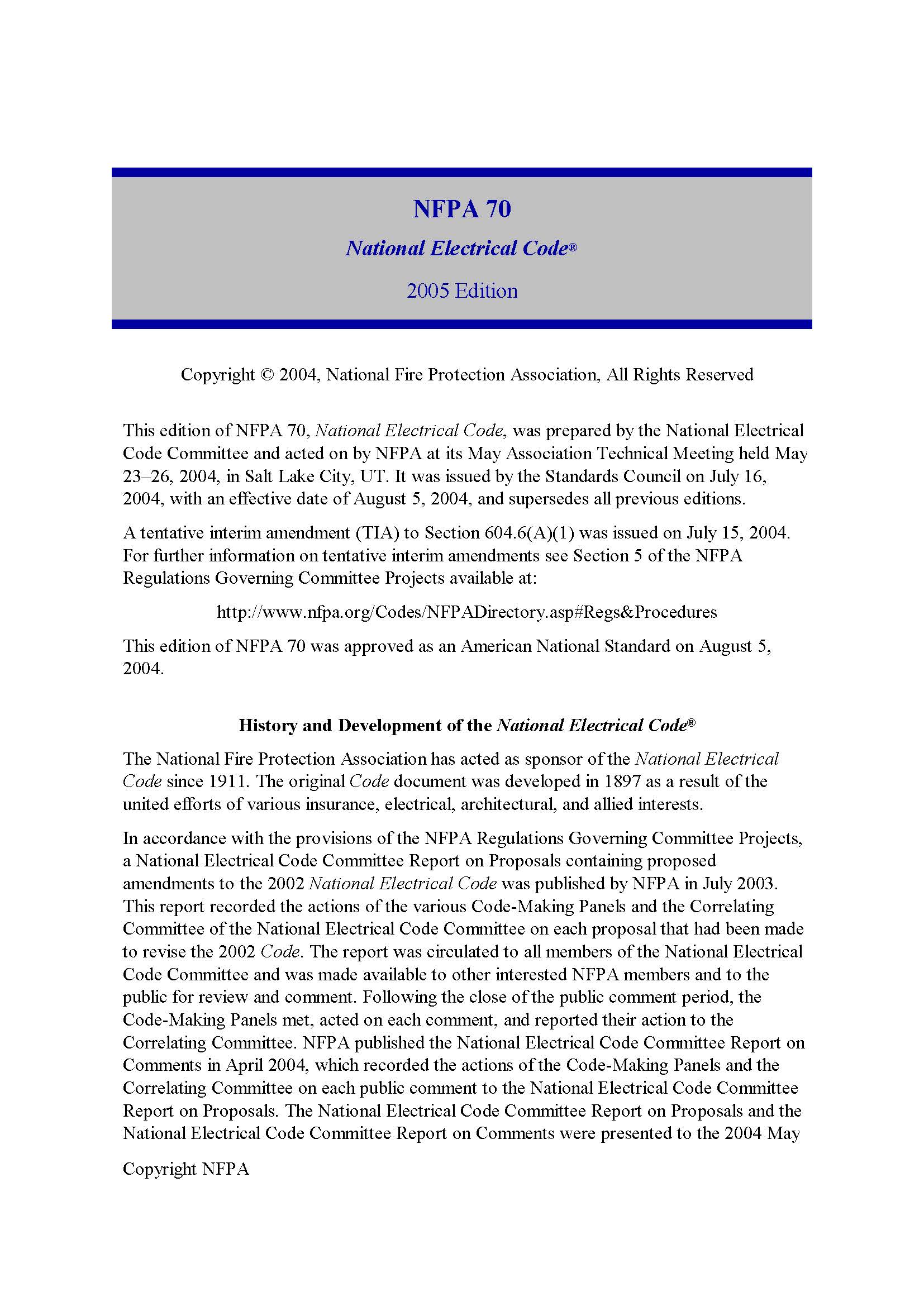
Standard NFPA 70
STANDARD NFPA 70
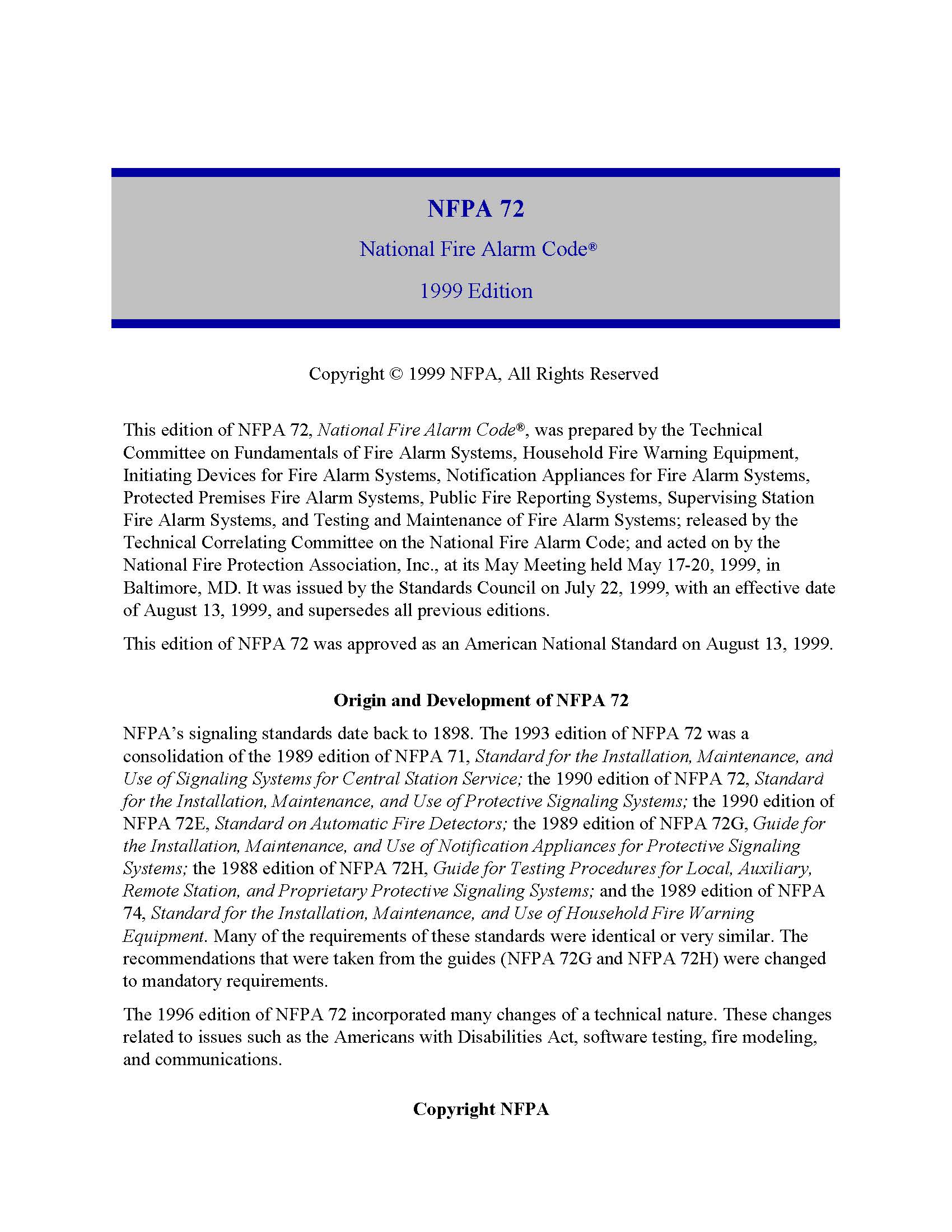
Standard NFPA 72
STANDARD NFPA 72
Standard NFPA 2001
STANDARD NFPA 2001